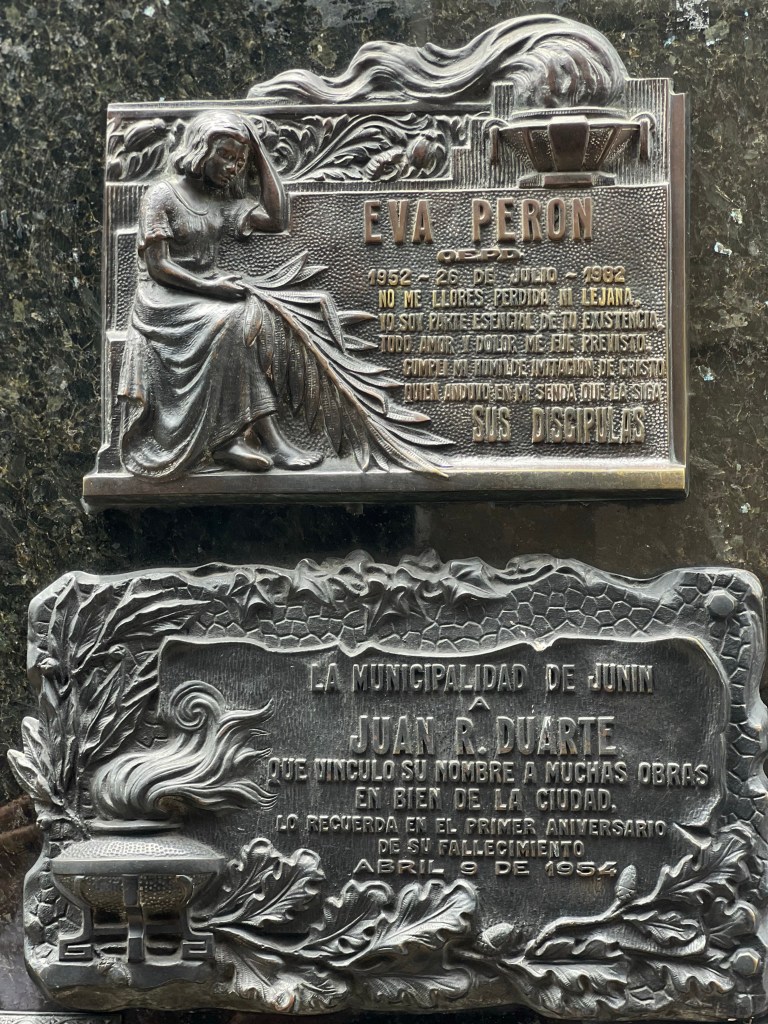
In the city of Buenos Aires, where wealth and poverty have long lived side by side, the legacy of Peronism is ubiquitous: a symbol of hope for many, the reason for the economic collapse of Argentina, for others.
With only 48 hours in Buenos Aires, we knew that we would barely scratch the surface of the City. We ended up cutting back our proposed (albeit optimistic) itinerary, so as to enjoy our time at particular highlights.
Our long-haul flight arrived mid- morning, without our luggage on board, so I had not planned a taxing day. Our first stop was Recoleta cemetery, resting place to the rich and powerful families of Argentina, and site of Eva Perón’s tomb. The mausoleums are extraordinary – testament to the wealth of its deceased residents – statues and ornate doorways adorn neat streets of imposing stone buildings containing intricately carved caskets.
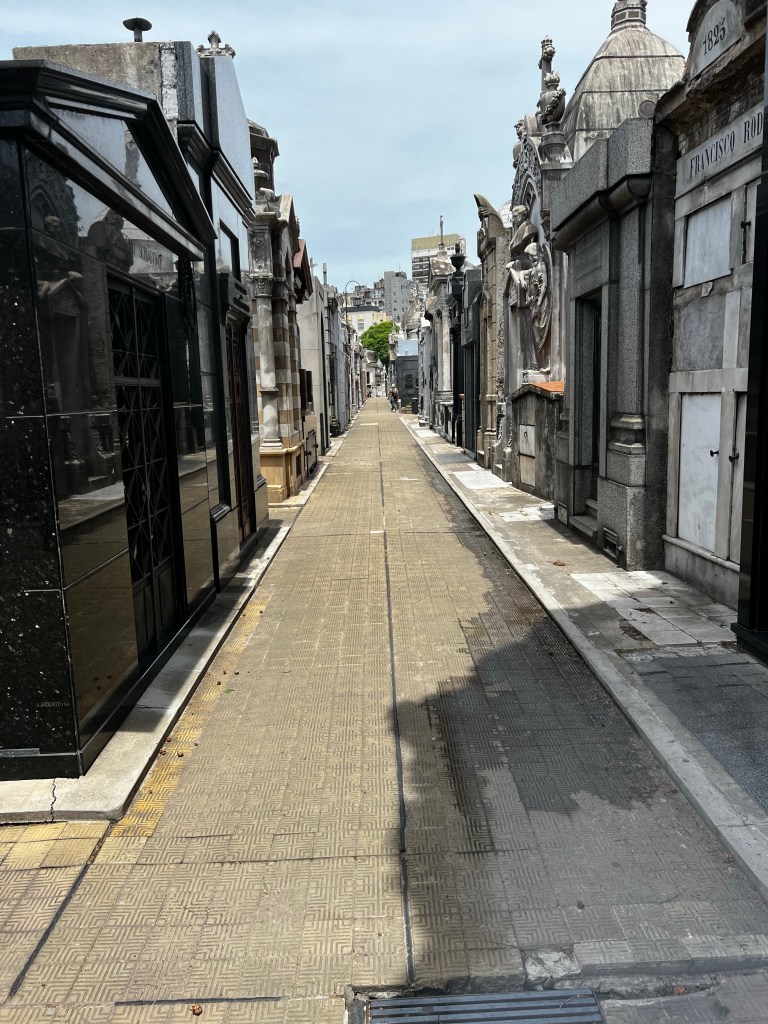
To understand the recent history, we visited the Museo Evita – a small and charming museum dedicated to Evita’s short life, childhood influences, meteoric rise to power, and her early death. Sophia and I loved the 1940’s fashion – a favourite client of Coco Chanel – that she wore to deliver some of her most famous speeches.
We stopped for lunch at El Preferido de Palermo, an old establishment renowned for Milanese. No reservation, but worth the queue, the limited menu done well and our first taste of Argentinian Malbec.
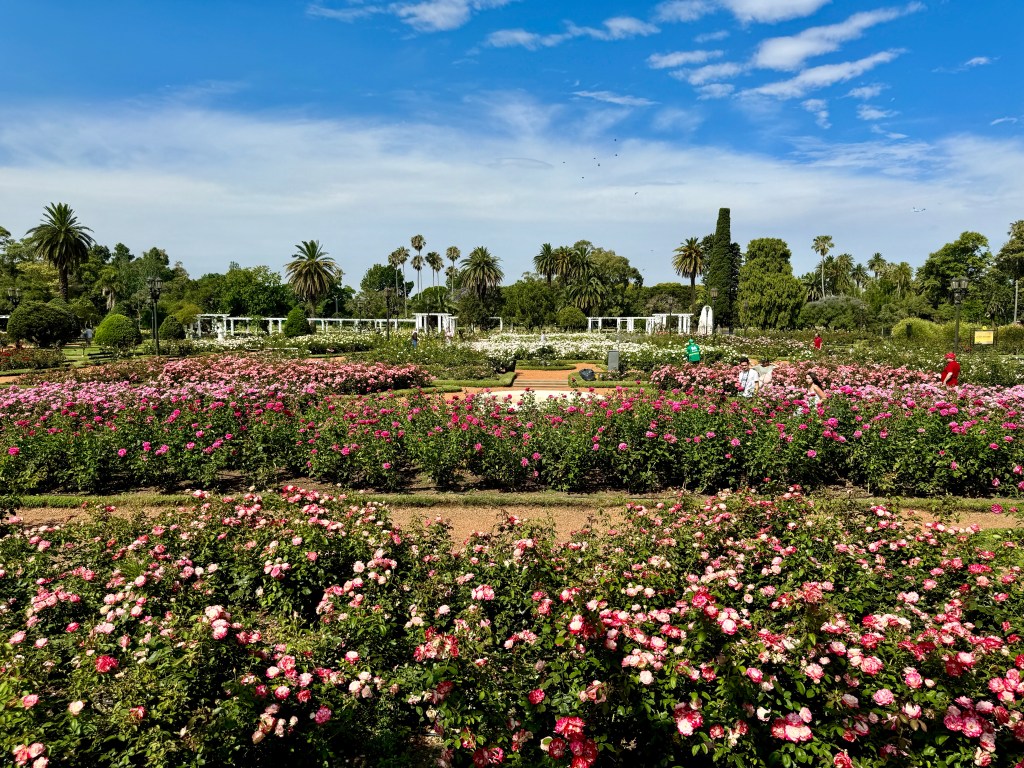
With temperatures rising we headed for the Rosedal in the heart of the leafy parks in Palermo, previously home to the Bourgeoise now used by foreign embassies and shopping district. We must by chance have visited the rose garden at its most spectacular. My parents would love it!
Lack of sleep and heat of the day taking its toll, Sophia and I retreated to a nearby nail bar in preparation for dinner.
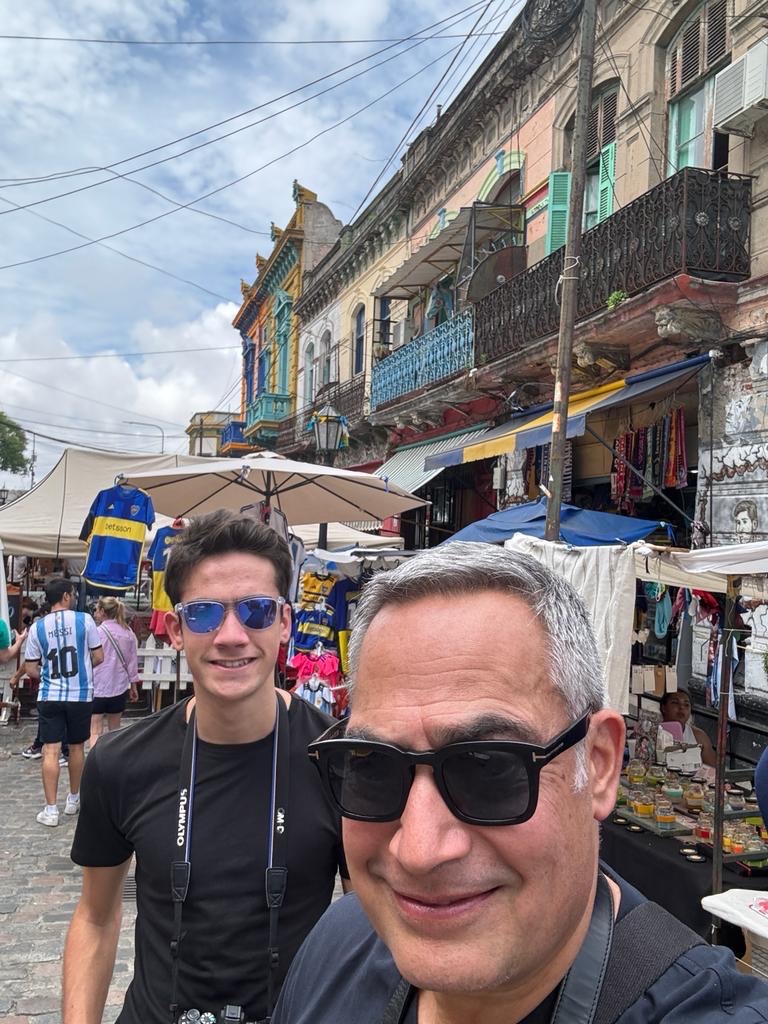
On the morning of the second day, we went to Caminito, traditionally home to the factory workers and slums. The slums remain, hidden behind the abandoned railway, but Caminito has a distinctly bohemian and trendy vibe.
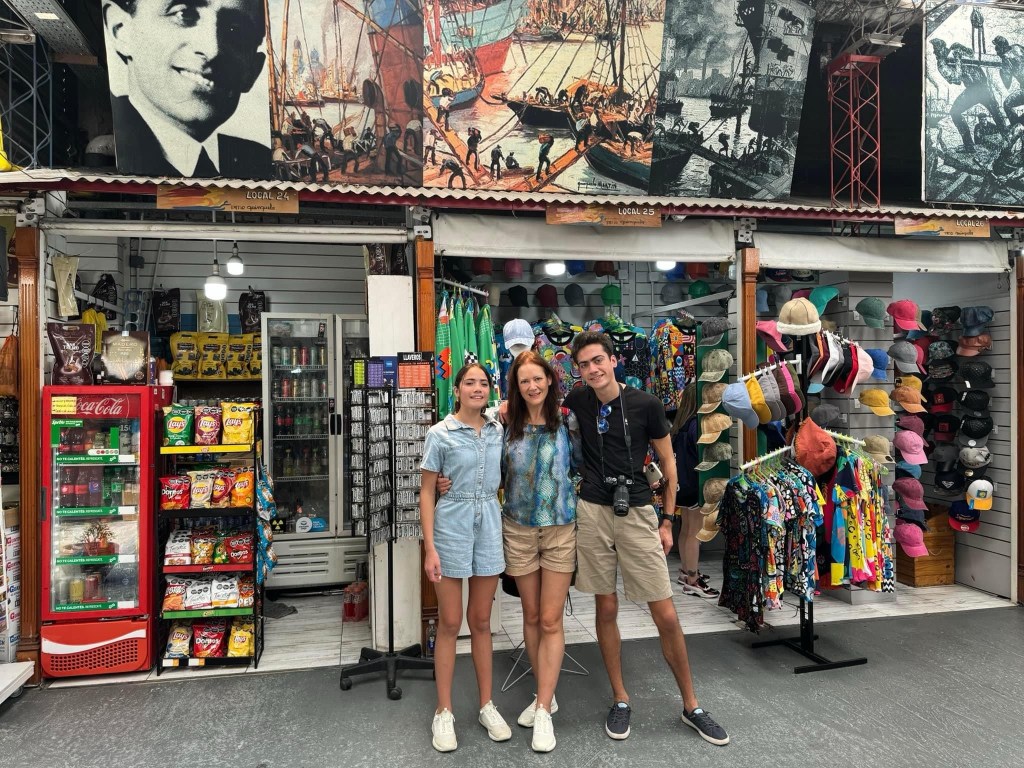
Caminito is one of the most photographed areas in Buenos Aires, with its colourful buildings, street vendors, busy cafes and spontaneous dancers. We had planned only a brief stop here to take photos, en route to a gallery, but instead enjoyed the morning wandering around this unique place.
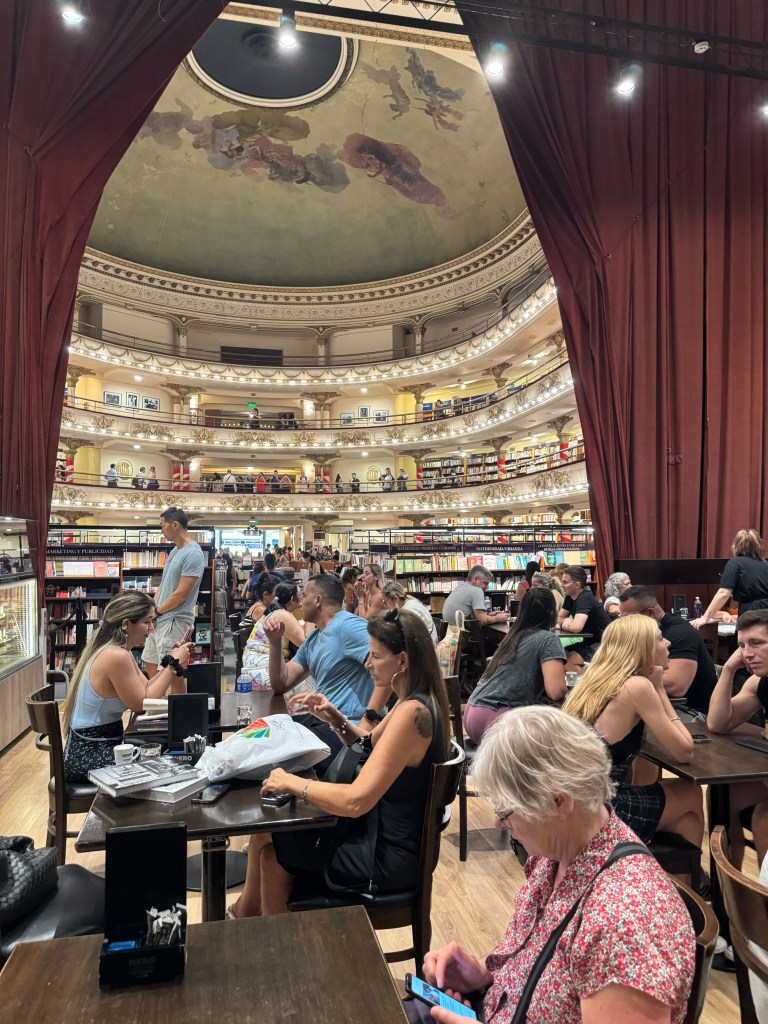
We had a snack lunch at El Ateneo Grand Splendid, a 100-year-old cinema turned bookstore with five floors containing over 120,000 books, and a café on the former stage.
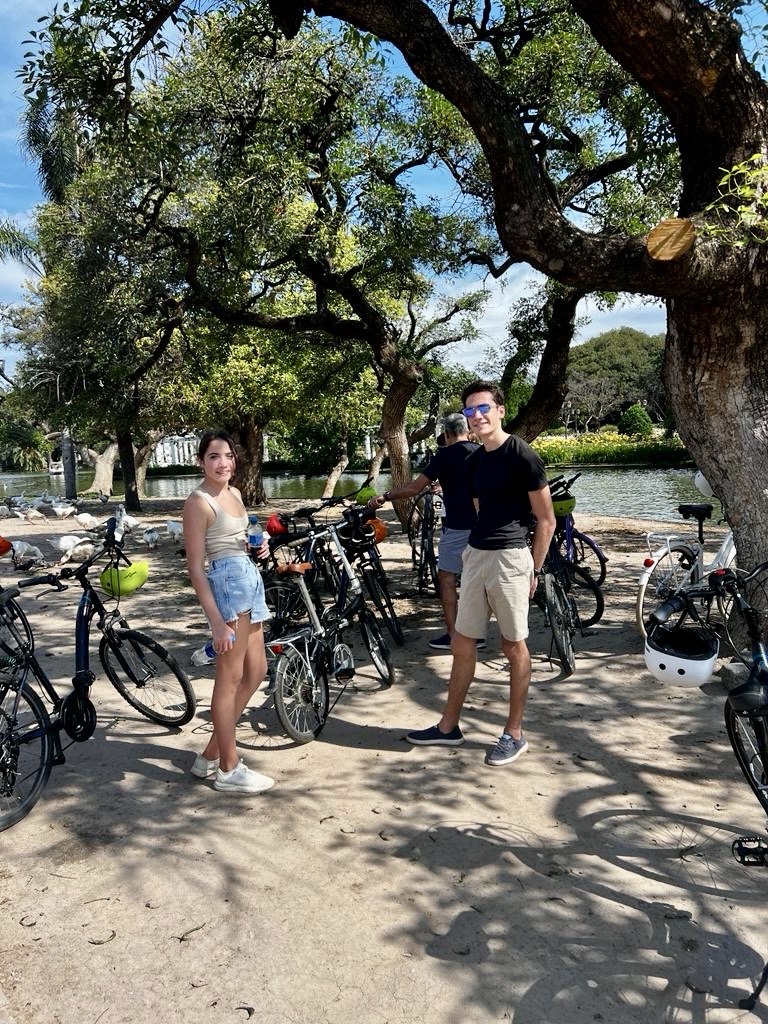
That afternoon we had booked a three hour bike tour around the city, which proved a great way to see some of the best sites when time is short, as well as an enjoyable experience in its own right. We cycled through the Playo de Majo – past the main government buildings, and through the embassy area and network of parks.
Our guide, with her own political agenda, described at length how the Falkland Islands belonged to Argentina but were occupied by the British, and that Argentina sent untrained, poorly armed 14 year olds to fight in, and inevitably lose, the Falklands war. Neither Chris nor I were inclined to interrupt her passionate speech on the subject!
And to finish our Buenos Aires trip, the initial plan had been to watch a tango show, abandoned due to an internal flight cancellation, we ended up at the Bar Notable Los Laureles, an off-the-beaten-track venue to enjoy an “open mic” evening of folklore music and poetry recitals with the locals. It was a truly unique experience, recommended by a very interesting travel blog, and not found in any guide book.

 Hi, I’m Rachel