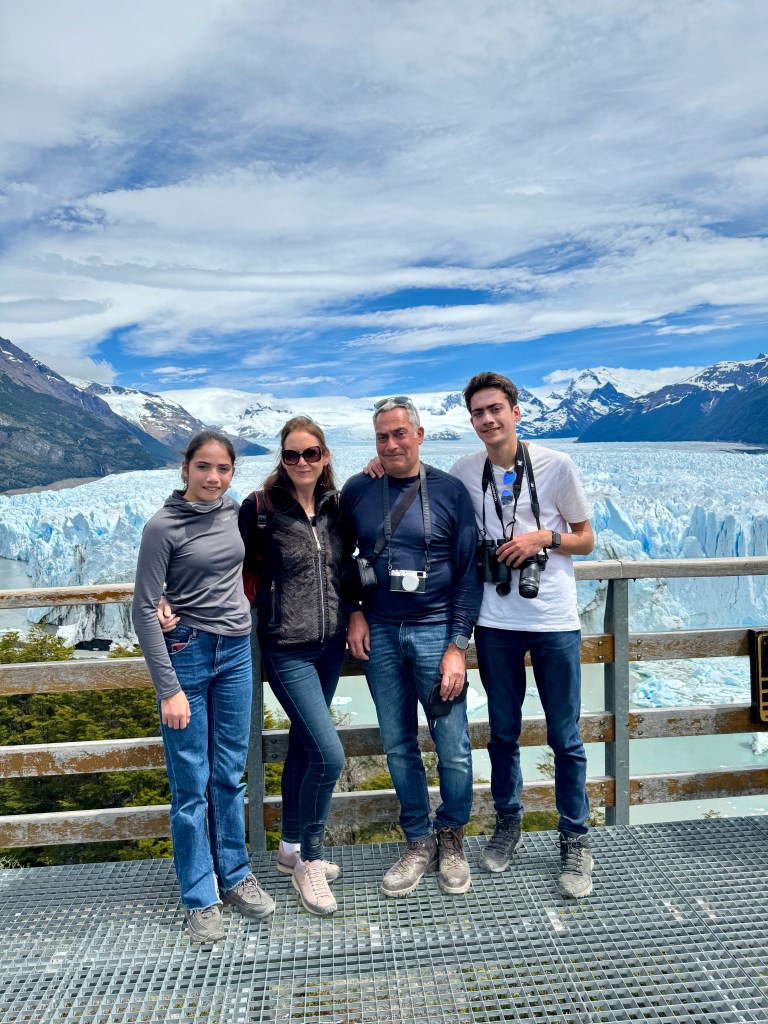
I’d seen the photos and read the reviews, but nothing prepares you for being up close and personal with the Perito Morano Glacier which stretches across the Southern Patagonian Plains of Argentina.
I know that I wasn’t going to make this a travel blog, but there’s just so much information that I don’t want to ever forget, so I’m going to download it here.

Being near and on the Glacier is a multi-sensory experience. We were advised to be in the moment, rather than looking through our camera lens; advice which proved invaluable.
Unexpectedly, the Glacier is noisy. I had imagined a glacier as a silent plain of smooth ice but in reality, it creaks and bangs as it calves from its face and inside the huge peaks and crevices which cover the surface of the Glacier. Broken icebergs fallen from the Glacier’s jagged face float ominously on the river downstream, warning of the ever present danger of further calving.

On a recommendation, we took a Safari Tour with a company called Big Ice, which we booked directly at the port (much cheaper than online through an agent). The Tour started by boat, in front of the south side of the Glacier. It’s quite simply unworldly. An imposing wall of 500 year old ice towering 30 metres in front of you and descending 100 metres below the water surface. A force of nature that can literally move mountains.
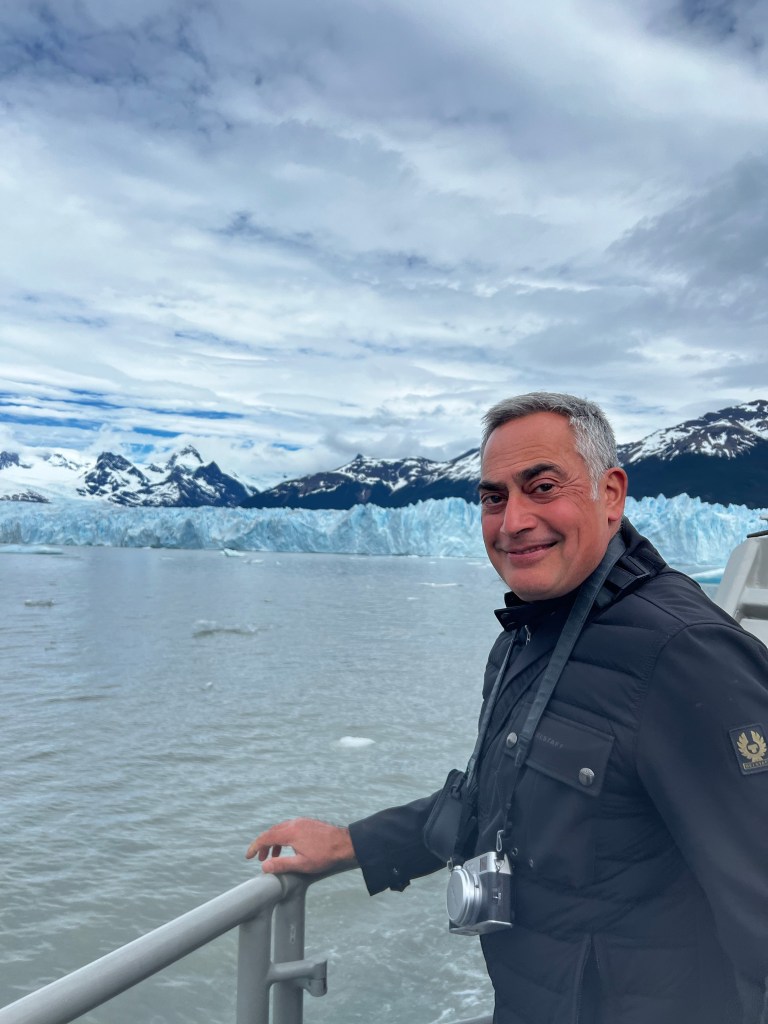
We docked on the sedimentary rock beds in front of the Glacier. The surface of which is littered with huge boulders of metamorphic rocks transported inside the glacial ice and deposited as it melts. Our guide pointed out scratches across the rock, carved by the glacier as it grew, scars revealed only at its melting.
Our guide was keen to address the changing behaviour of the Glacier. Using a photographic reference point, pictures showed a steady growth of the ice wall between 1914 and 2018, followed by an alarming recession on a daily basis thereafter – a metre a day – with icebergs breaking from underneath the glacier and damaging its structural integrity which, in turn, leads to more dramatic and frequent calving incidents. Evidence of global warming accelerating the natural warming of the planet following the last ice age.

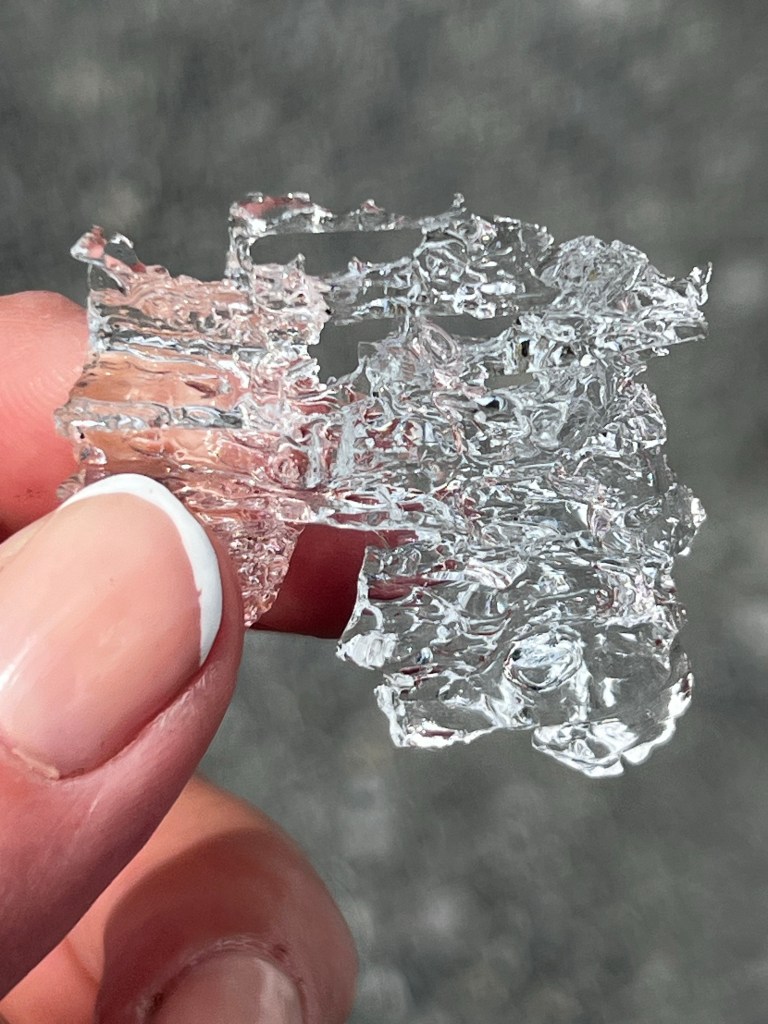
We walked to the face of the Glacier and our guide encouraged us to break off a chunk of ice, feel the texture and taste it. The ice was beautiful – a delicate web of small blocks gave the surface a textured feel, and multifaceted angles caught the light causing it to sparkle. The ice had such a clarity and the melting water tasted so pure with the total absence of any mineral salts. This purity being the reason, in fact, why this melt-water would lead to dehydration.
In contrast, the water running from a glacial spring into the river had the same extraordinary clarity of colour, but a strong mineral taste accumulated on its rocky path to the mountain source.
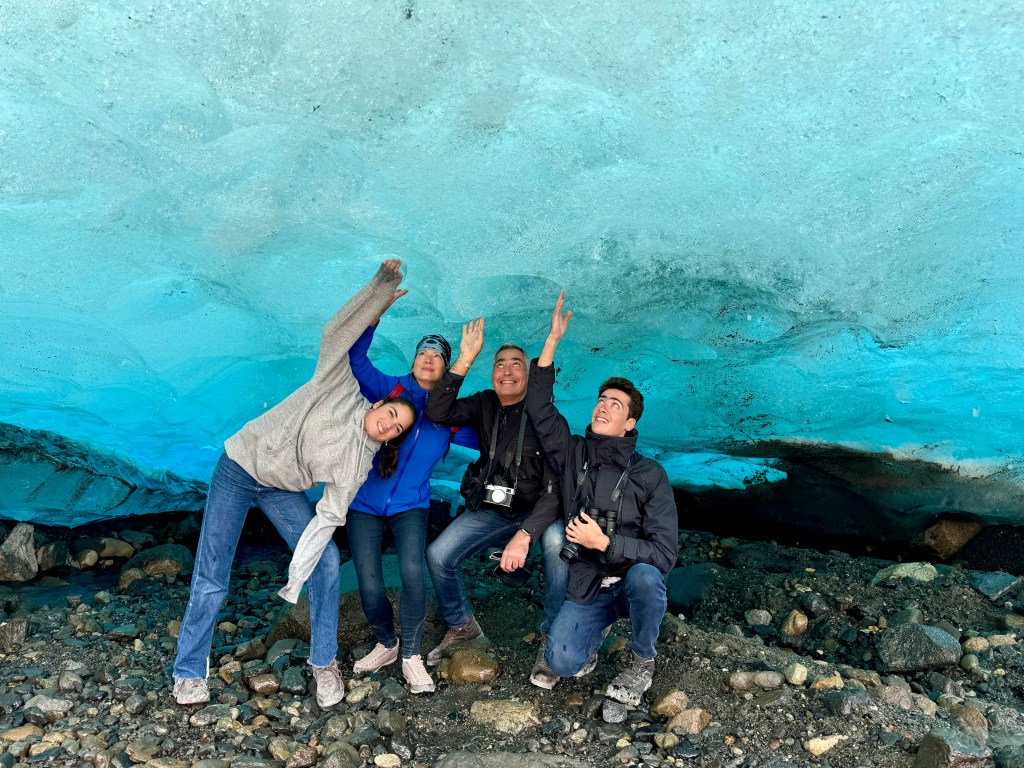
We explored the face of the Glacier, walking inside the crevices and ice caves at its base. It is in these darkest depths that the ice takes on a luminosity of florescent blue. Our guide explained that of course the ice is completely clear from surface to base, but at the surface white light is reflected whilst the density of the ice, which has been compacted over centuries and expelling all oxygen, allows only the long wavelengths of bluer hues to penetrate the deeper ice.
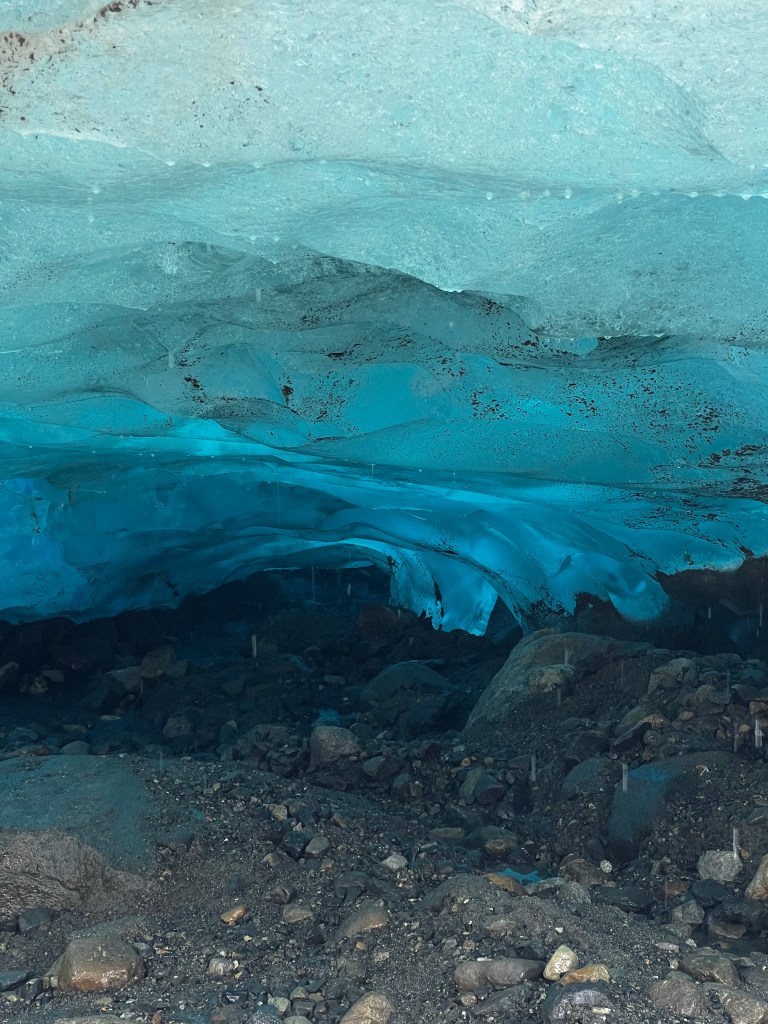
It was in the ice cave that we felt the ceiling surface. In contrast to the exterior, it was perfectly smooth, dripping as it melted.
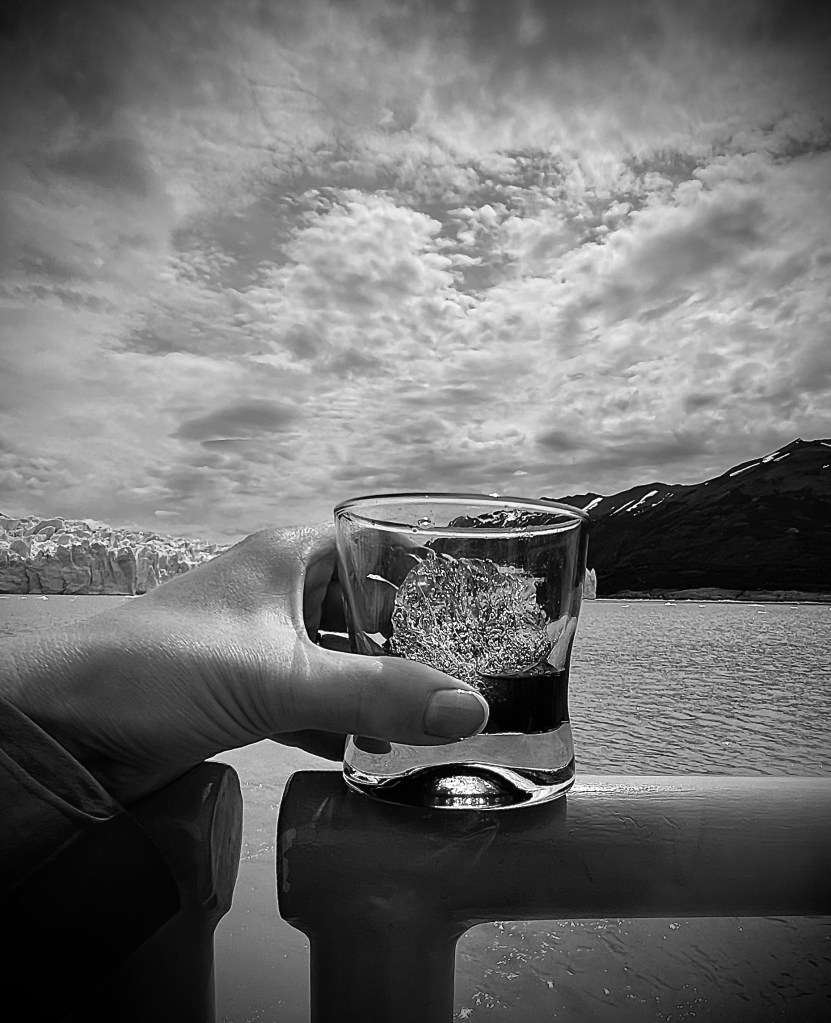
Following a walk through the forest alongside, filled with flowers I had never seen before and wished I knew about, we arrived back at the boat, to be greeted with a drink of local blueberry liquor with a hunk of glacial ice – which has to be the ultimate ice cube.

 Hi, I’m Rachel